PROJECTS
Modelling & Simulation
Using shape analysis to personalise joint replacements and predict outcomes
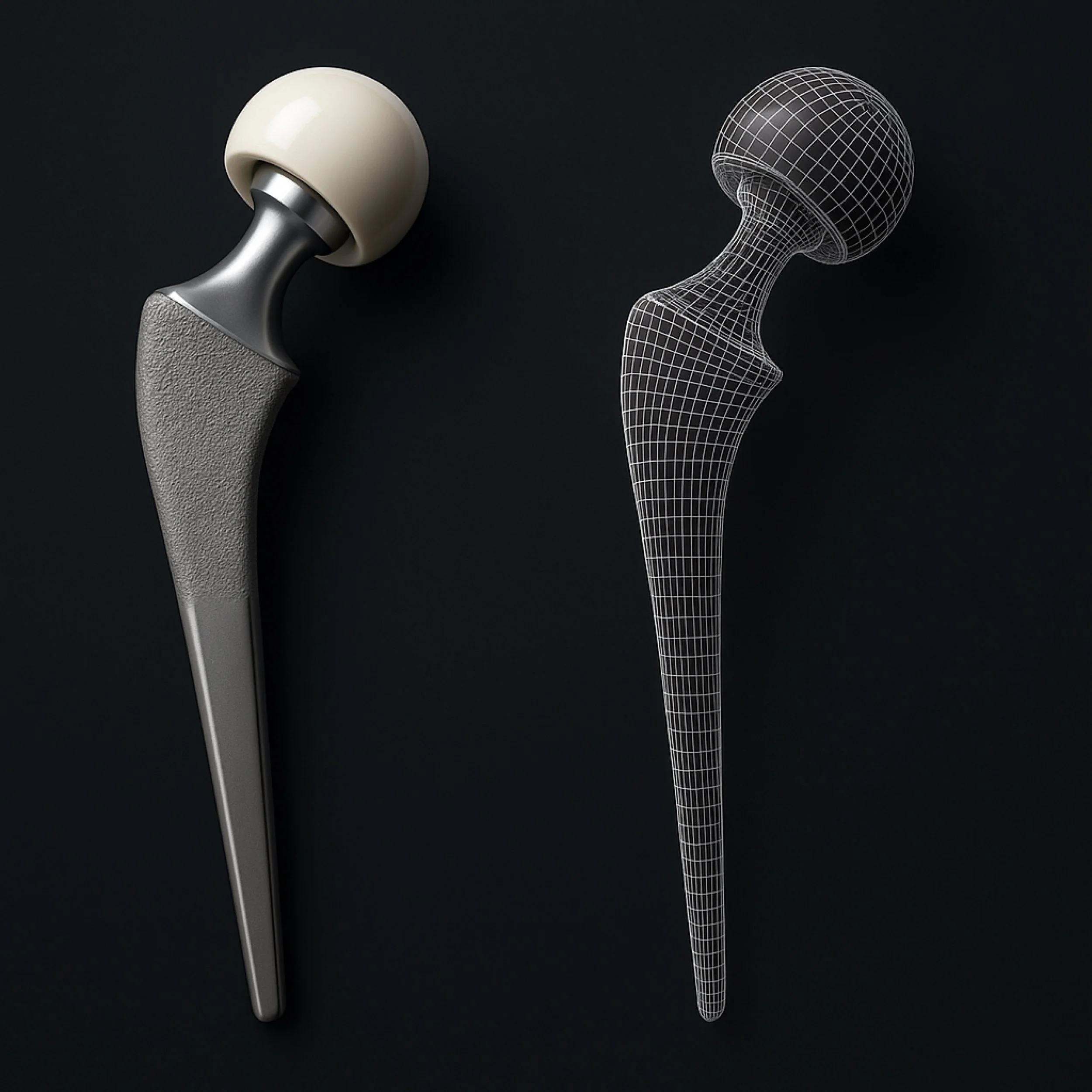
Understanding how bones and joints vary across individuals is essential for creating implants and surgical strategies that truly fit the patient. Our team uses advanced data modelling and computational simulation to analyse anatomical variation, predict how implants will perform, and support more personalised surgical decision-making.
By studying large datasets of bone shapes and joint mechanics, we can identify subtle patterns that influence implant fit, stability, and long-term behaviour. Statistical shape models help fill in missing anatomy during complex revision cases, while simulation tools allow us to test design concepts virtually before they are used in surgery and help monitor performance.
How we personalise implants and tools for complex cases
In-silico testing and simulation
We use advanced simulation tools to model how implants behave during surgery and over time. Virtual studies let us examine impaction, positioning, and long-term loading conditions—helping identify risks and optimise designs before they are used in patients.
Predicting performance and outcomes
By combining modelling and simulation, we can evaluate how different implant designs or surgical choices may influence stability, biomechanics, and longevity. These insights support more evidence-based decisions and safer, more effective treatments.
Understanding anatomical variation
We analyse large datasets of bone and joint shapes to capture how anatomy varies across the population. This helps us design implants that fit more accurately and support personalised surgical planning.
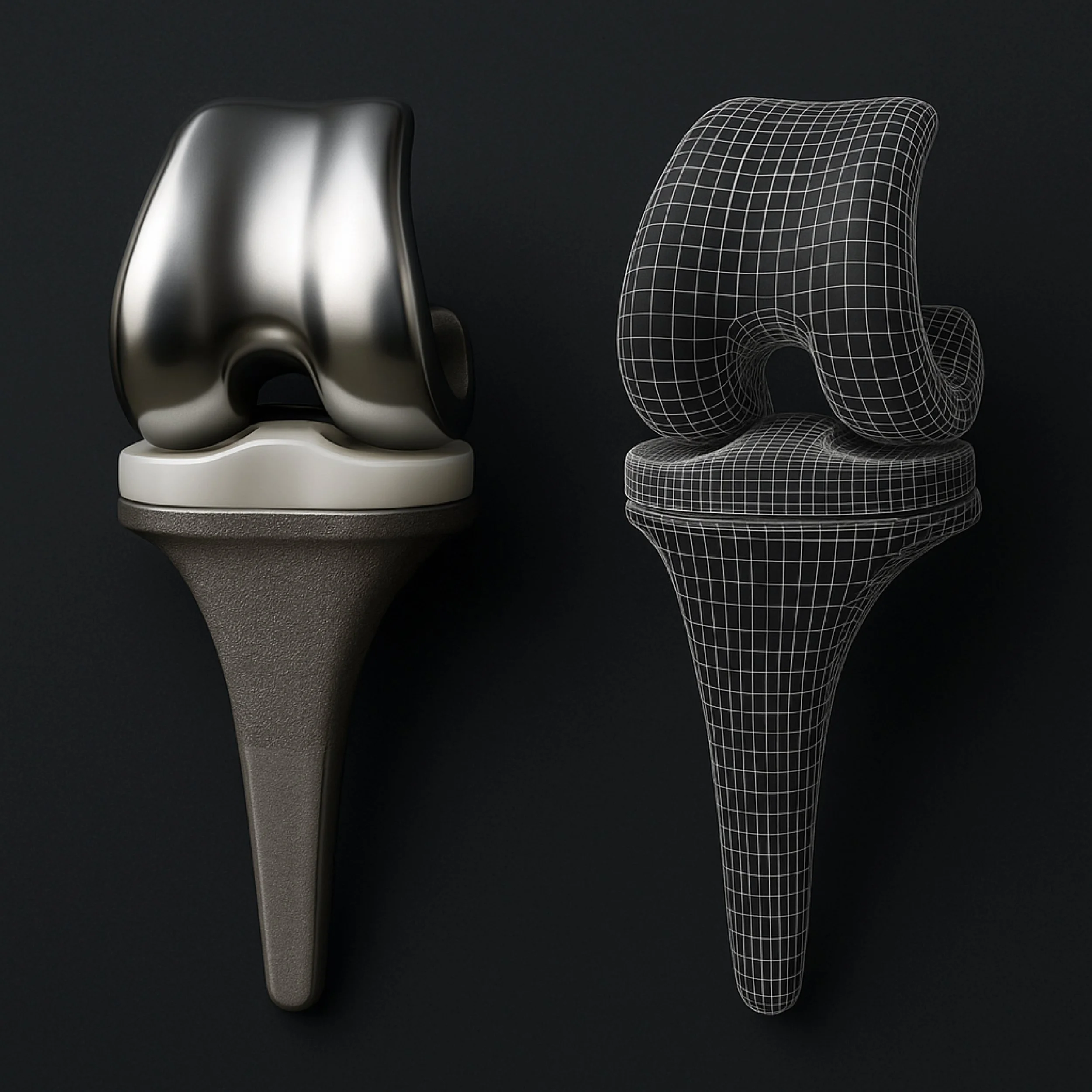
Understanding variation of the trochlea
Accurate tibial rotation & trochlear morphology are essential for the success of knee arthroplasty.