
Opportunities, announcements and talking points from the STL community…

International Society for Technology in Arthroplasty
ISTA 2026
UNDERSTANDING THREE-DIMENSIONAL TROCHLEAR GROOVE MORPHOLOGY USING STATISTICAL SHAPE MODELLING
Xing Lim, Anna Di Laura, Angelika Ramesh, Prof. Michael T Hirschmann
STEM DESIGN DICTATES VERSION: A COMPARATIVE 3D-CT ANALYSISOF FEMORAL ROTATIONAL ALIGNMENT IN TOTAL HIP ARTHROPLASTY
Ms. Angelika Ramesh, Ms. Xing Lim, Prof. Alister Hart, Dr. Anna Di Laura
FROM VARIABILITY TO STANDARDISATION: CONSENSUS CT PROTOCOLS FOR HIP AND KNEE ARTHROPLASTY
Ms. Angelika Ramesh, Ms. Xing Lim, Prof. Alister Hart, Anna Di Laura
THREE-DIMENSIONAL CHARACTERISATION OF PROXIMAL TIBIAL MORPHOLOGY USING STATISTICAL SHAPE MODELLING
Ms. Xing Lim, Ms. Angelika Ramesh, Prof. Michael T Hirschmann, Anna Di Laura
EFORT 2026
OUR TALKS
The impact of stem geometry on femoral anteversion: A comparative study
Improving arthroplasty planning through standardised CT imaging protocols
Is proximal tibial morphology a determinant of tibial component rotation in TKA?
Three dimensional characterisation of proximal tibial morphology using statistical shape modelling
Optimising implant-bone fit: A comparative analysis of two custom implant design approaches
Design Philosophy Matters: Quantifying bone removal in CMAIs
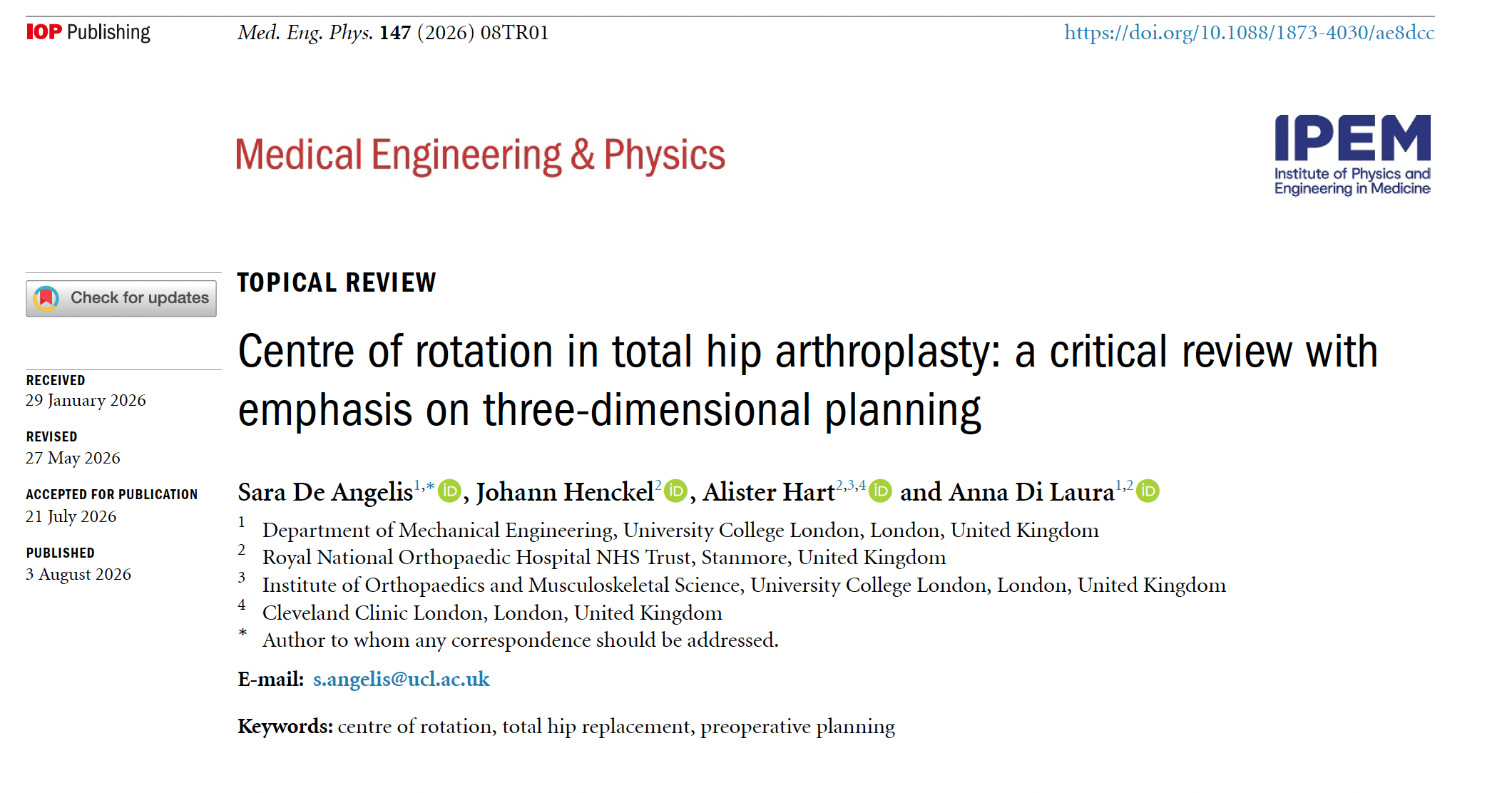
The Role of Technology in Hip Replacement Accuracy!
Restoring the hip’s natural centre of rotation is an important part of achieving a successful and long-lasting total hip replacement. However, accurately positioning the acetabular cup remains a significant surgical challenge.
This review examines how surgeons plan and restore the centre of rotation, comparing traditional 2D templating with newer technologies such as 3D CT planning, robotic-assisted surgery and patient-specific instrumentation. While 2D templating is widely used and effective for many routine cases, its accuracy can be affected by image magnification and patient positioning. In contrast, 3D planning can provide a more precise assessment of hip anatomy, and robotic systems can help translate this plan into the operating theatre, although cost and training requirements remain important limitations.
Patient-specific instrumentation may offer a more affordable alternative, while surgeon experience and intraoperative judgement continue to play a vital role, especially in patients with complex or abnormal anatomy.
Overall, restoring the centre of rotation to within around 5 mm of the planned position appears to support better hip biomechanics and implant longevity. Advanced planning technologies may be particularly valuable in challenging cases, including revision surgery and developmental dysplasia of the hip, where achieving accurate implant positioning can be more difficult.
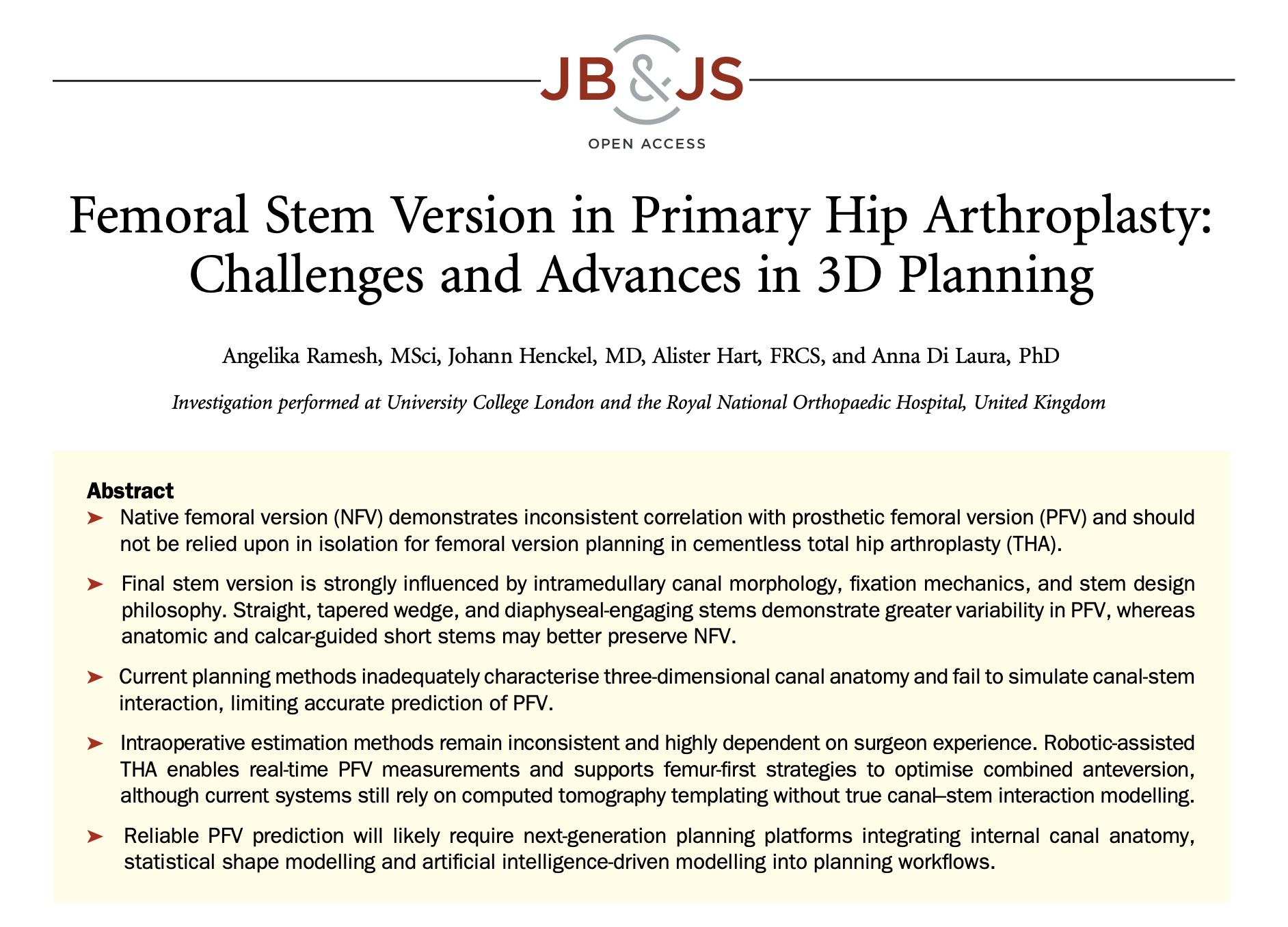
Advancing Femoral Stem Planning in Total Hip Replacement
Accurate positioning of the femoral stem is an important factor in achieving a stable and well-functioning total hip replacement.
This review explores the challenges of predicting femoral stem version, which can vary depending on a patient’s individual bone anatomy, the shape of the femoral canal and the type of implant used.
Current planning techniques do not always capture these complex 3D relationships, while intraoperative assessment can depend heavily on surgeon experience.
Emerging technologies, including 3D planning, robotic-assisted surgery and artificial intelligence, could help provide more accurate predictions and support personalised implant positioning. These advances may ultimately improve surgical planning and help surgeons achieve more consistent outcomes in total hip replacement.
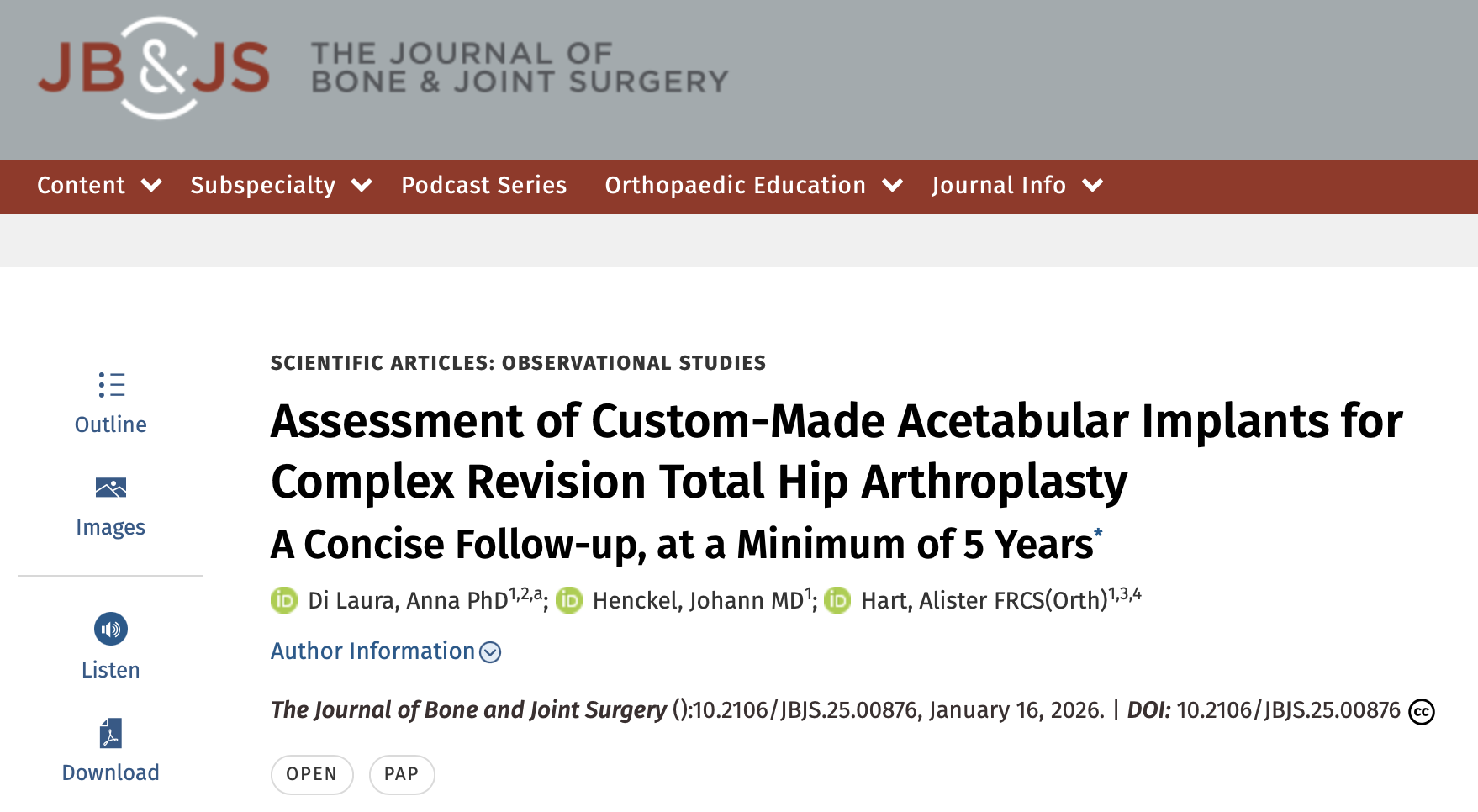
Thrilled to share our latest publication in The Journal of Bone & Joint Surgery!
Our team has just published a study titled “Assessment of Custom-Made Acetabular Implants for Revision of Pelvic Discontinuity and Severe Bone Loss” which evaluates long-term outcomes of 3D-printed, patient-specific acetabular implants in some of the most complex hip revision cases.
Custom-made 3D-printed implants demonstrated excellent cumulative survivorship, even in cases with pelvic discontinuity and massive bone loss.
These implants enabled significant functional improvements post-surgery, supporting stability where conventional options often fail.
Detailed preoperative planning and engineering collaboration were crucial to achieving reliable implant positioning and osseointegration.
Revision hip arthroplasty for patients with severe acetabular defects is one of the most challenging scenarios in orthopaedic surgery. Custom implants harnessing additive manufacturing offer a promising solution to restore biomechanics, improve patient outcomes, and potentially redefine the reconstructive armamentarium.
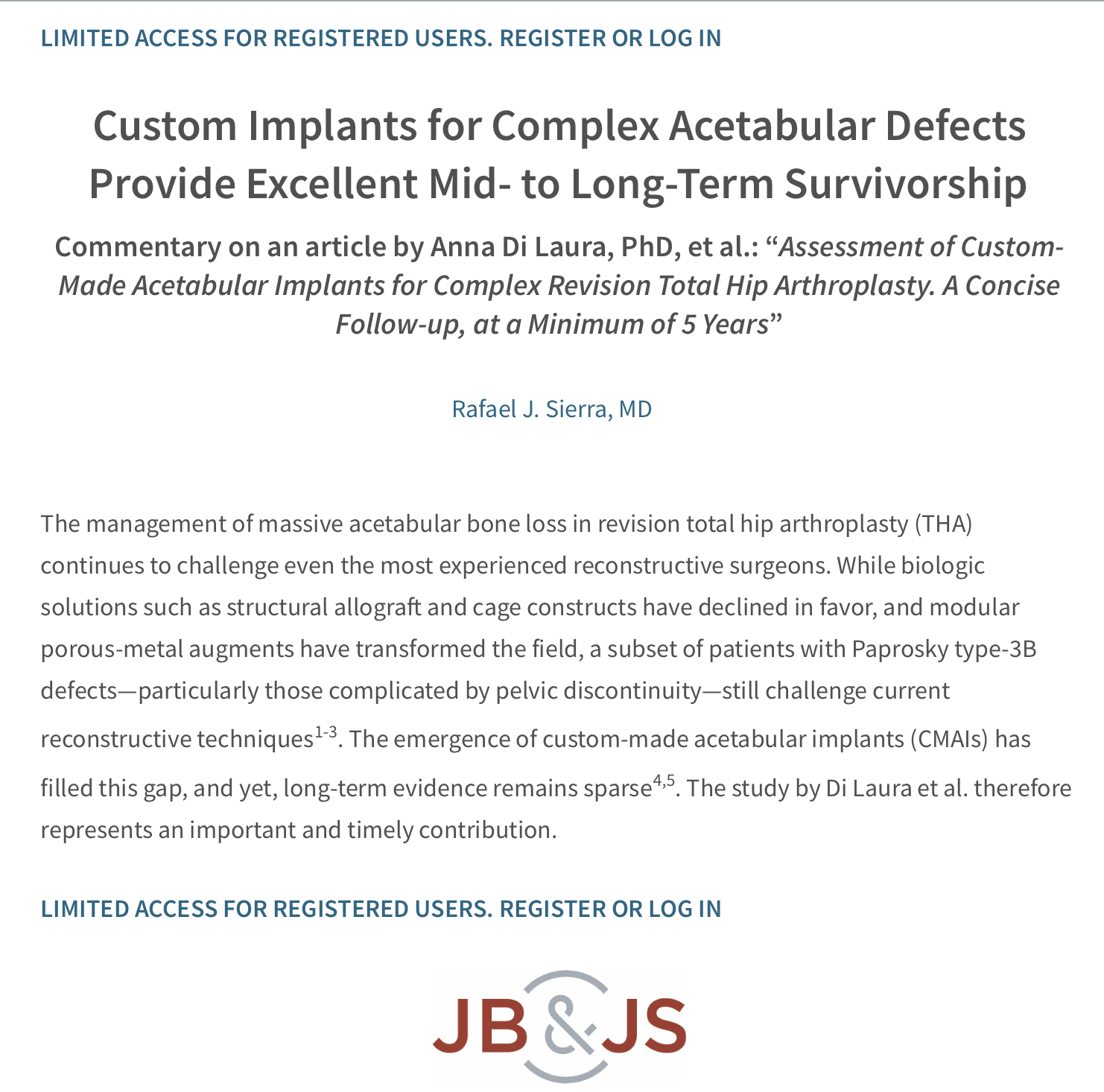
The emergence of custom-made acetabular implants (CMAIs) has filled this gap, and yet, long-term evidence remains sparse.
The study by Di Laura et al. therefore represents an important and timely contribution.

Strong papers showcased at ISTA 2025
At ISTA (International Society for Technology in Arthroplasty) 2025 in Rome this year, research teams from the Royal National Orthopaedic Hospital (RNOH), University College London (UCL), presented new findings aimed at improving total hip arthroplasty (THA) planning and outcomes.
Highlights of the work included:
• Statistical shape models that analyse sex-specific variations in proximal femoral anatomy, offering improved prediction of prosthetic femoral version and stem fit.
• A multi-modal imaging workflow that combines 3D computed tomography with standing and seated EOS imaging to capture functional spinopelvic orientation, addressing limitations of static, supine imaging.
• Patient-specific acetabular implant designs that maximise host bone contact while reducing the need for bone removal during complex revision procedures.
Collectively, these projects demonstrate ongoing progress toward more precise, biomechanically informed, and personalised THA solutions
Find out more
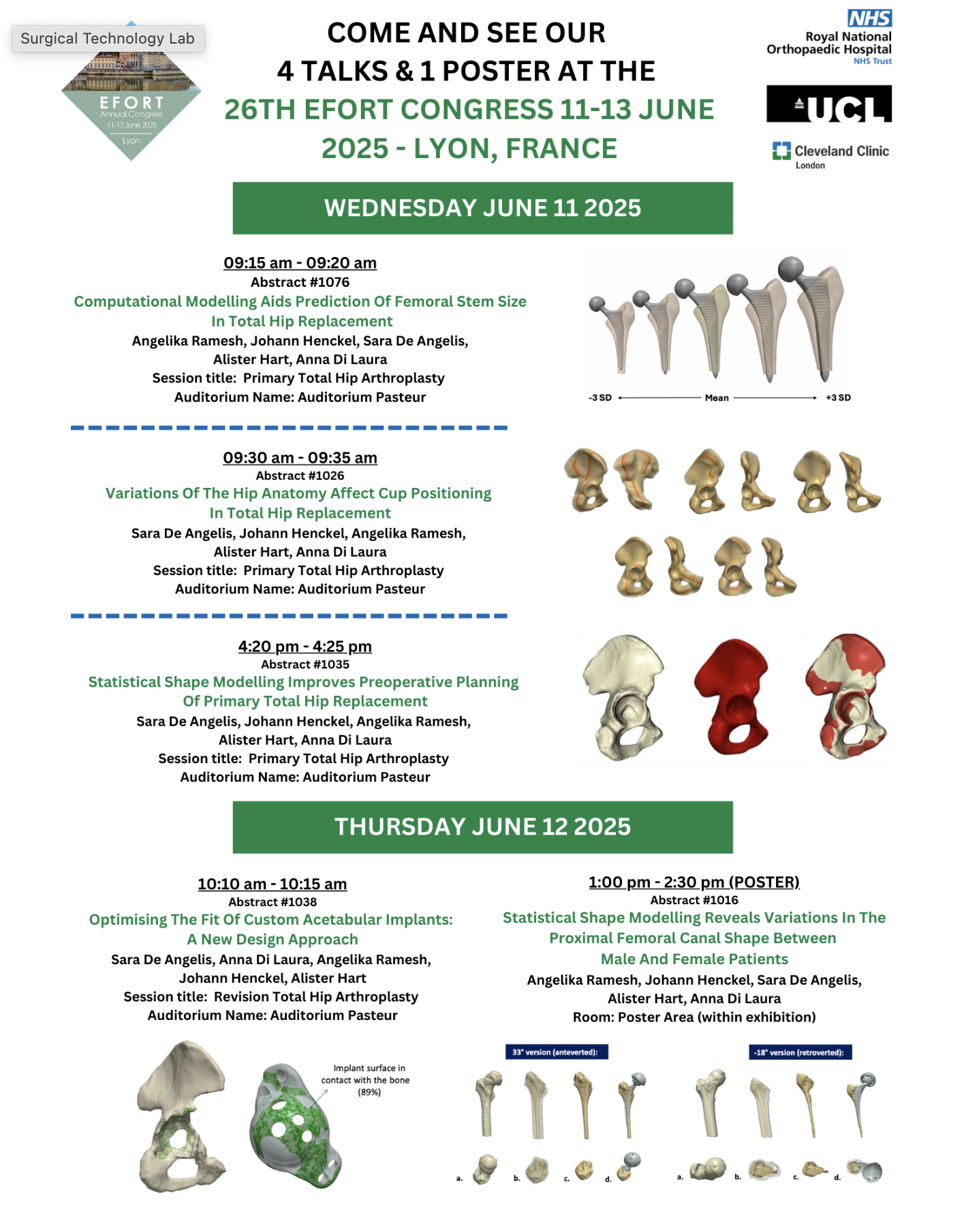
EFORT Congress in Lyon
The team delivered four oral presentations and one poster at the European Federation of National Associations of Orthopaedics and Traumatology (EFORT) Congress.
Their contributions covered a broad spectrum of cutting-edge research areas, including:
Custom implant design and development, highlighting innovative approaches to patient-specific solutions.
Computational modeling for anatomical evaluation, demonstrating how advanced simulations can enhance pre-operative planning and clinical decision-making.
Reconstruction modeling and implant performance assessment, showcasing methods to predict functional outcomes and optimize implant behavior in real-world clinical scenarios.
Together, these presentations reflected the team’s commitment to advancing orthopedic science through the integration of engineering, computational tools, and clinical insight..
Find out more
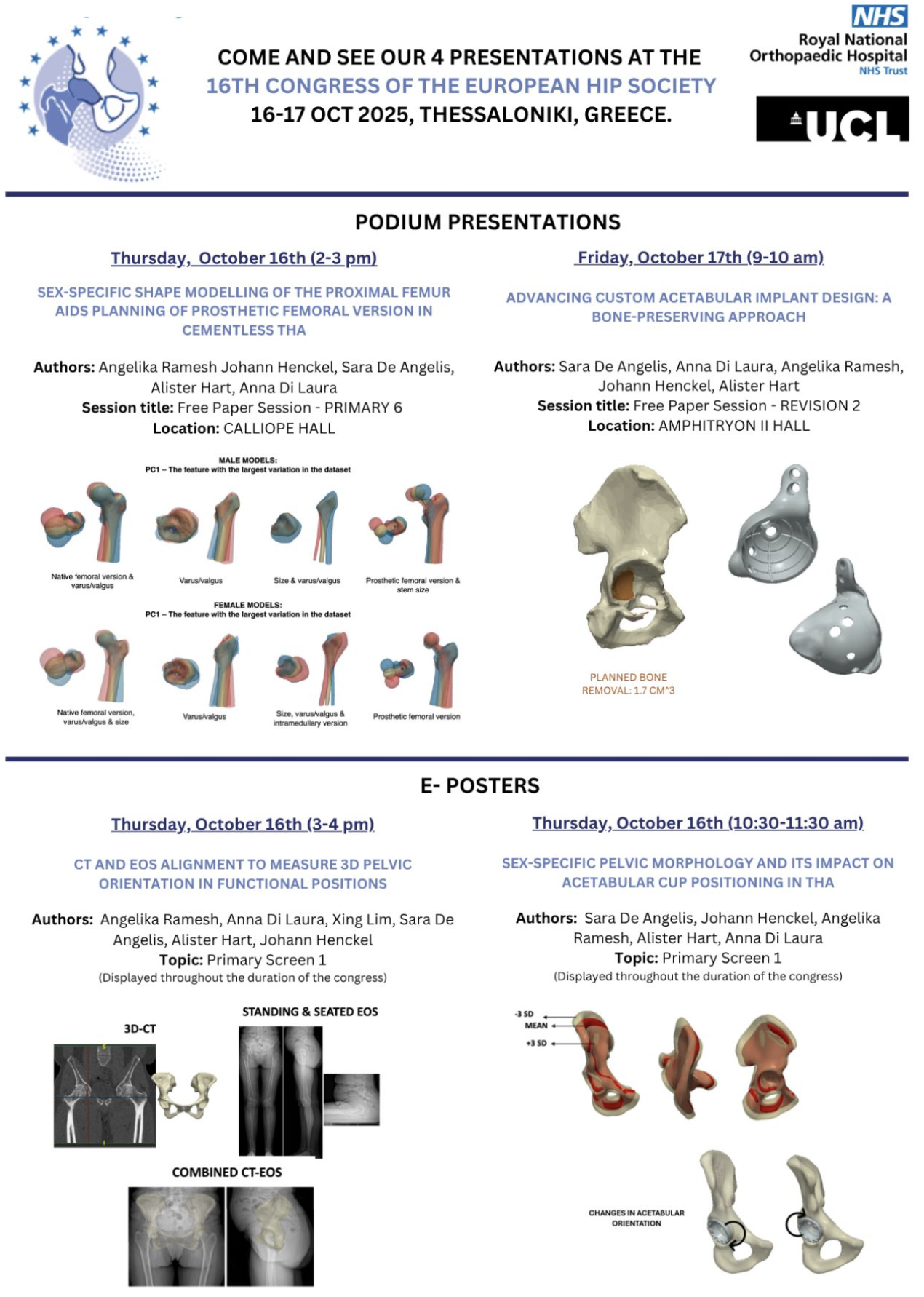
European Hip Society
The team showcased its work at the European Hip Society (EHS) Congress, presenting four oral talks on advancing hip surgery.
Their contributions highlighted several key research areas:
Patient-specific and custom implant innovation, aimed at improving outcomes in complex hip cases.
Computational modeling for detailed anatomical assessment, enabling more accurate diagnosis and surgical planning, Acetabular and femoral.
Biomechanical and clinical performance modeling of hip reconstruction and implants, providing deeper insight into implant behavior, stability, and long-term function.
These presentations underscored the team’s dedication to pushing the boundaries of hip research through multidisciplinary expertise and state-of-the-art computational methods.
Find out more
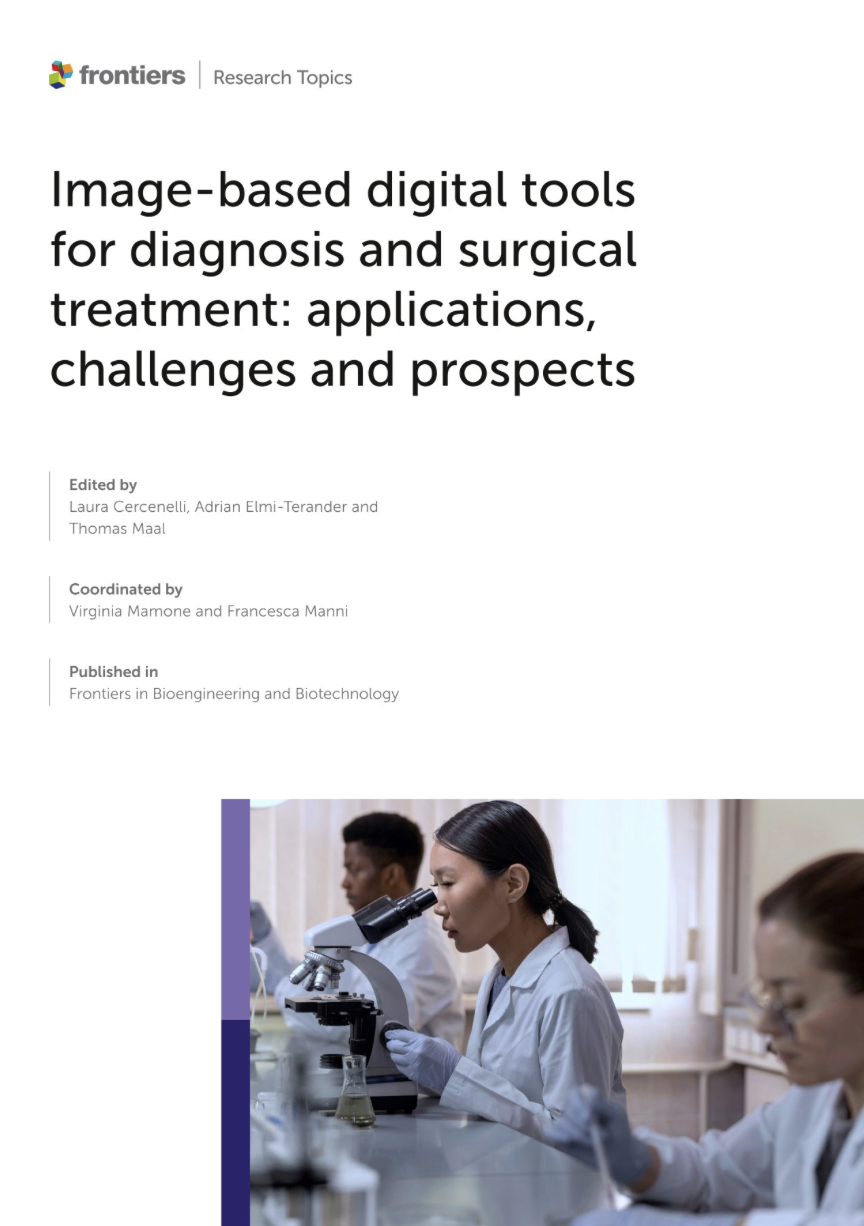
Frontiers e-book
Our research article "The accuracy and precision of acetabular implant measurements from CT imaging" has been published in the Frontiers e-book!
The e-book entitled "Image-based digital tools for diagnosis and surgical treatment: applications, challenges and prospects" outlines the transformative impact of emerging, digital imaging technologies in surgical planning and outcome assessment.
Find out more