
CASE STUDY
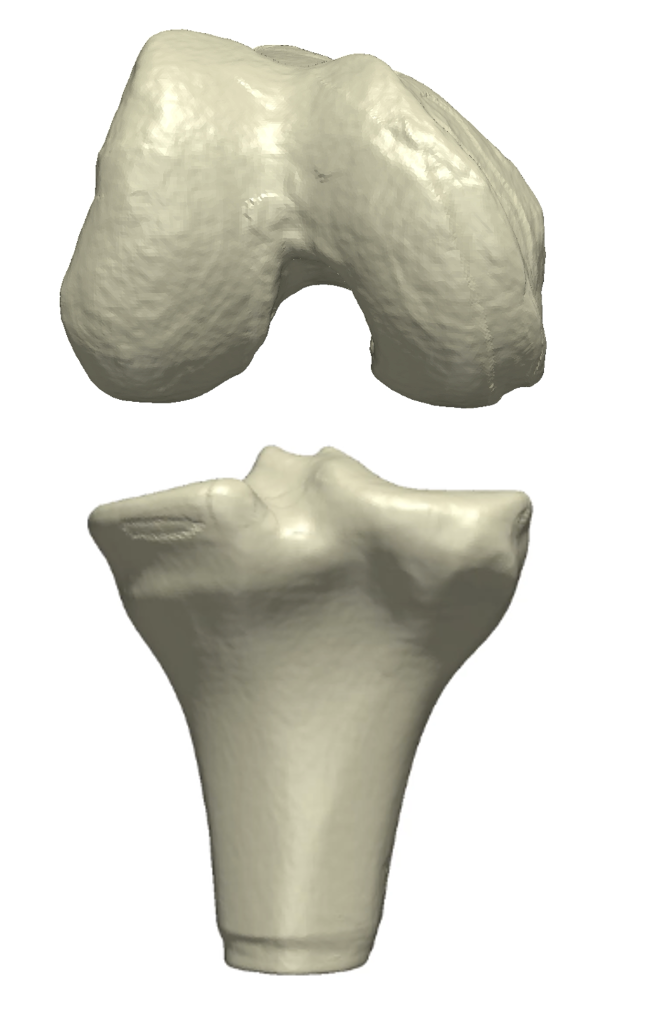
Understanding variation of the trochlea
Accurate tibial rotation & trochlear morphology are essential for the success of knee arthroplasty.
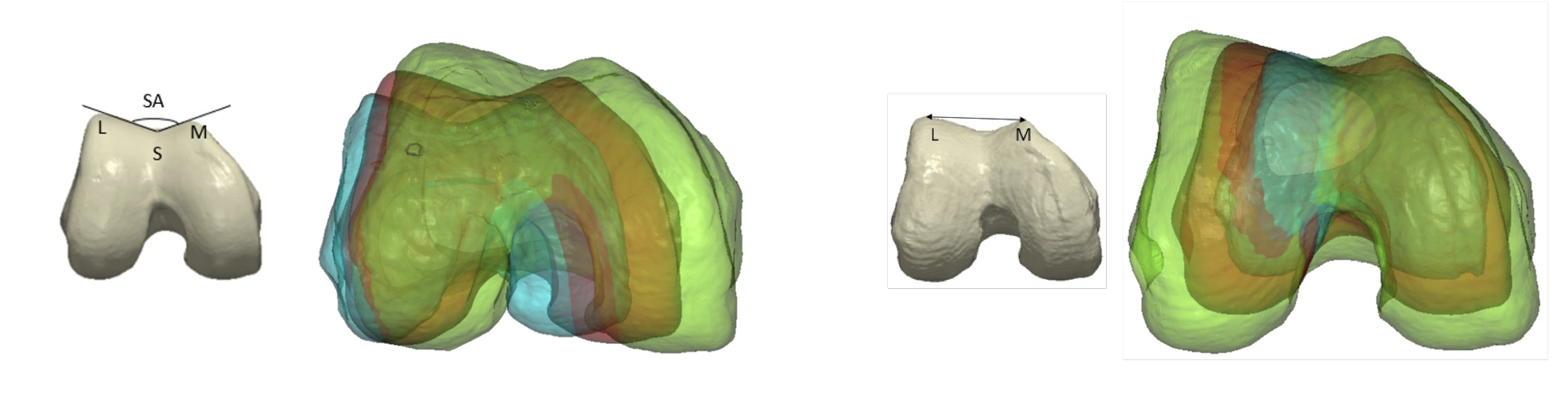
The trochlear groove is essential for guiding patellar motion, and variations in its 3-dimensional (3D) shape influence patellar tracking and contribute to patellofemoral instability. Common measurements such as sulcus angle and lateral trochlear inclination are taken from single axial CT or MRI slices and therefore capture only a limited portion of the true 3D groove anatomy
The challenge
With growing interest in how trochlear morphology affects patellar mechanics, there is a clear need to characterise the groove as a continuous 3D structure.
Our solution: shape modelling
Work in progress…..
Why it matters
A better understanding of how femoral morphology contributes to instability and may support more accurate identification of pathological trochlear features, improved pre-operative planning, and future development of personalised surgical strategies in patellofemoral reconstruction.